Classroom Timesavers by Worksheet Place: Social Skills

Showing posts with label Social Skills. Show all posts

Is there a Direct Correlation Between ADD and Executive Functioning Skills?

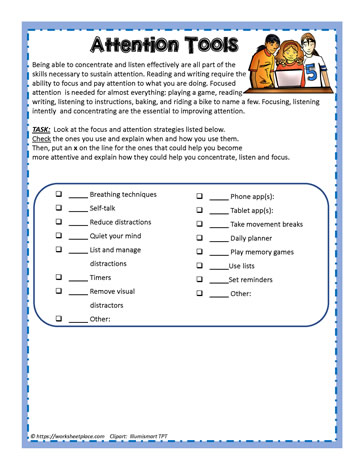
Execxutive Functioning Toolkit - FREE

YES!!!  Attention Deficit Disorder (ADD) and executive functioning skills are closely linked. Executive functioning refers to a set of mental processes that enable people to manage their thoughts, actions, and emotions to achieve goals. These skills include planning, organization, time management, working memory, impulse control, and problem-solving. Individuals with ADD often experience difficulties with these same executive functioning skills, as ADD directly affects the brain's ability to regulate and coordinate these processes.

People with ADD typically struggle with maintaining focus, prioritizing tasks, managing time effectively, and controlling impulses, all of which are key components of executive functioning. For example, they may find it challenging to start or complete tasks, stay organized, or remember important information. This overlap between ADD symptoms and executive functioning difficulties makes it harder for those with ADD to perform well in academic, professional, and everyday tasks.

Improving executive functioning skills can be beneficial for individuals with ADD. Structured activities, worksheets, and strategies that target areas like organization, working memory, and task management can help compensate for some of the challenges ADD presents. By building stronger executive functioning skills, individuals with ADD may find it easier to focus, manage tasks, and stay on track, leading to better outcomes in school, work, and personal life.

Social Skills and Character Traits Self Rating Scales

Discover the effective use of character trait checklists to nurture positive character development in 6th to 10th grades. These checklists empower both students and teachers to assess and enhance traits such as responsibility, respect, empathy, honesty, caring and more. With self-assessment, peer feedback, and goal-setting, these rating scales engage students in a reflective journey towards personal growth. Fostering a collaborative environment, our checklist not only measures character traits but also celebrates achievements, creating a holistic approach to character development. Promote a positive and supportive classroom culture that enhances students' overall well-being and social-emotional skills with these free activities.

Evidenced Based Strategies to Improve Executive Functioning Activities


Sample of Free Activities
Executive functioning skills are are a set of skills that help kids to plan, organize, and regulate their behavior. These skills are important for goal-directed behavior, working memory, persistence and decision making. Executive functioning skills are often impaired in individuals with ADHD, autism, and other neurological and mental health conditions.

The activities provided help with the following:

1. Improved Time Management: Executive functioning skills can help students better manage their time, prioritize tasks, and plan ahead for upcoming events. This can lead to increased productivity, greater efficiency, and better results. 2. Improved Organization: By developing executive functioning skills, individuals can become more organized in their day-to-day activities. This can lead to improved focus, less stress, and better academic performance. 3. Improved Problem-Solving: Executive functioning skills can help individuals better analyze and solve problems. This can lead to better decision-making, more creative solutions, and greater success in both personal and professional life. 4. Improved Memory: Executive functioning skills can help individuals better remember information and recall it when needed. This can lead to better academic performance, improved work performance, and better overall quality of life.

5. Improved Social Interactions: Executive functioning skills can help individuals better manage their emotions, develop better relationships, and communicate more effectively with others. This can lead to improved social interactions, better team dynamics, and healthier relationships.


The Importance of Social Skills


Social Skills In the Classroom and Out 

Social Skills and Social Emotional Teaching are a large part of what teachers do on a daily basis.
Why is it, we take it for granted that all children know how to use appropriate social skills? The truth of the matter is that many of them need to be taught how to use appropriate social skills. Even more so with the prevalence of students with Asperger's on the increase. Social skills refers to the ability to act  and behave appropriately in a variety of social situations. It also means, reading and interpreting body language and facial expressions.

This week, I added a new category in worksheets, devoted to teaching social skills. It's just a start and I expect to add many, many more yet.
\
One of my favorite activities to do is to have the students role play with a group of students to show how to behave in social situations that present some difficulty.

Social emotional learning has always been a part of classroom teaching but there has never been such a need as there is now. Children are coming from broken homes, parents are often working more than one job and the first thing to go is social skills.

Social Emotional Learning

Social Emotional Learning Teaching Ideas and Activities

Many of us educators already know that we embed social emotional learning into the many things that we do on a daily basis. However, I'm going to share a few of some of those ideas here.

Initiative: To support initiative, a child must feel confidence and have a good sense of self-esteem. Therefore by boosting their confidence levels and enhancing self esteem, you'll be setting your students up to take initiative more often.

Collaboration and Cooperation:  These skills are important, especially in group work.  Do you provide opportunities to work together? Do you help your students develop a code of conduct for group work? Students need to have opportunities to respect the ideas and opinions of others even though they may not agree with them.  Ongoing opportunities for pairs, triads and small groups enhance collaboration and cooperation skills.
Print This Poster

Persistence or 'Stick With ITness':  Sometimes this is also referred to as 'grit'. For a student to develop persistence, they need to learn from mistakes and see success. They need to have opportunities to overcome distractions and move on despite obstacles. Help children see the learning in the errors. Celebrate the learning from mistakes, help them to see that sometimes, the most permanent learning stems from making errors. Soon your students will not fear failure and develop persistence.

Communication and Relationships: A language rich environment is usually evidenced in all good teacher's classrooms. Relationships are supported by providing opportunities for collaboration and cooperation. Social skill strategies also help with relationships.

Leadership: Children have to work within various group sizes to develop negotiating skills which leads to leadership. Leadership also happens when students are able to be empathetic regarding others. The willingness to make compromises is another avenue to help children develop leadership skills.

For a few worksheets on social emotional learning, view them here.

Social Media Worksheets

Free Social Media Teaching Unit

Are you teaching social media within your media literacy unit? Here's a free unit for you.


There are numerous educational jurisdictions that are now implementing a bring your own device (BYOD) program. Using technology in the classroom makes good sense. However, along with it comes using the devices responsibly.

Students need to understand what leaving a digital footprint means so that they can make wise decisions about what they put online. After all, there will come a time that it may help or harm them. Wise decisions are critically important.

I have developed many printables on social media that include: privacy settings, how to tweet, privacy violations, how to proceed with caution, how to use social apps at school, the do's and don'ts and many, many more.

These worksheets are suitable for students at a variety of grade levels.

Students will benefit tremendously by having the social media worksheets integrated into your language curriculum.

As always, any suggestions that will help you reach your potential as an educator are most welcome. Have a great week educators, your students count on you each and every day. Be the teacher of the class you yourself would like to be in.

Help Your Students Set Goals

Goal Setting for Kids Worksheets

Goal Setting for Kids


Setting goals both inside and outside of the classroom is important. However, all too often a goal is set without support and help to determine the strategies that will help realize the goal.

When you help a student set a goal, limit it to no more than three and perhaps just one depending on the type of student you are working with. The student needs to take ownership and help identify the goal that would be suitable.

Look at the goals in the sample on the left. Review with your students and ask them to prioritize the top three goals according to what they feel their needs are. Once they've identified their top three goals, it's time to think about what those goals look like when they are implemented.

For instance, let's take "I will remain on task". What does that look like? Student should be able to determine a few strategies that make be something like:

  • When my teacher is talking, I will always make eye contact
  • When I am working with a group, I will be responsible for doing my part
  • When I am completing work at my desk, I will not daydream or talk to my friends
Let's take another example: "I will use my indoor voice"
  • I will not blurt out, instead, I will put my hand out and wait my turn
  • I will speak softly 
  • I will not speak out of turn
Once the goal(s) have been set and the strategies discussed, it's time to follow through. Remind the students daily of their selected goals, help them to realize those goals with positive reinforcement. Do not leave a goal until the student has realized the goal to the best of their ability. Sometimes it's helpful to use tracking sheets over a period of time.

See the worksheets and printables on SMART goals as well.

If you have strategies that have worked for you, be sure to share.